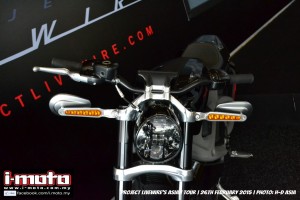
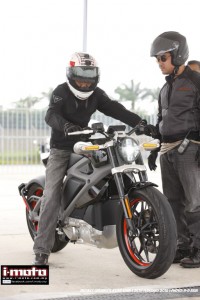
 Harley-Davidson Asia gave us a SHOCK recently when they notified us through their Malaysian dealer, Harley-Davidson Kuala Lumpur, that we were among the local media selected to ride their first electric bike, which is known as Project Livewire.
The electric bike first caused a stir in the motorcycling in September 2014 when an online entertainment site posted a photo of a stuntwoman riding the machine. She was doubling for actress Scarlett Johansson who plays Black Widow in Marvel Studio’s Avengers: The Age of Ultron movie. 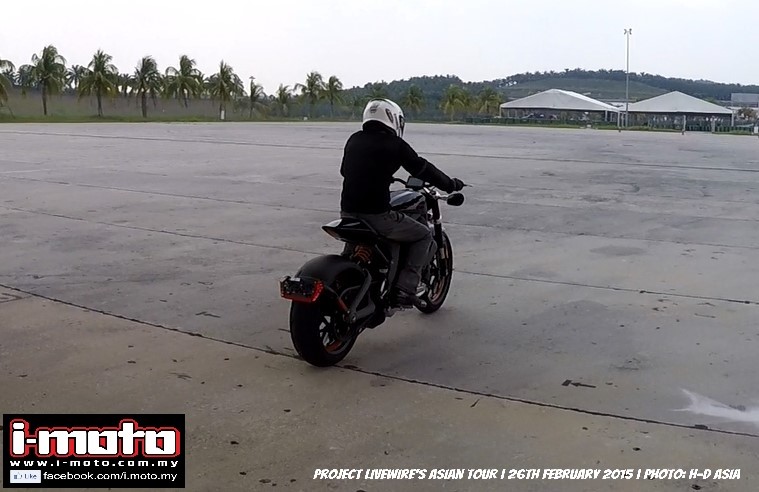
From the frenzy that followed of the photo’s appearance, Harley-Davidson America had to release news of the Livewire bike much earlier than anticipated. Of course, the Livewire being an experimental prototype electric motorcycle, it was the American motorcycling media that had firsthand look and experience riding it before the rest of the world.
That means it would be quite a while before those residing outside the USA has a chance to ride the Livewire motorcycle. Like they said, it’s better late than never, and the moment for the Asian motorcycling media to ride the Livewire was made possible during the final week of February 2015.
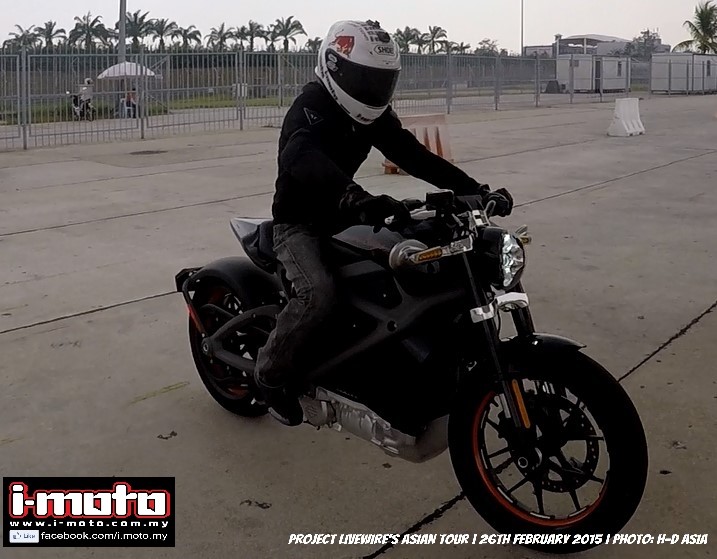
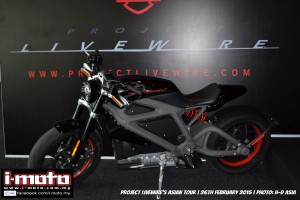
The Livewire bike certainly does not look like any other Harley has ever rolled on the tarmac before. Call me a skeptic, but I have seen many electric bikes before but the Livewire looks like something else altogether. So far, most electric bikes out there are always short performance-wise when compared to their petrol-powered counterparts.
Would riding the Livewire change my mind?
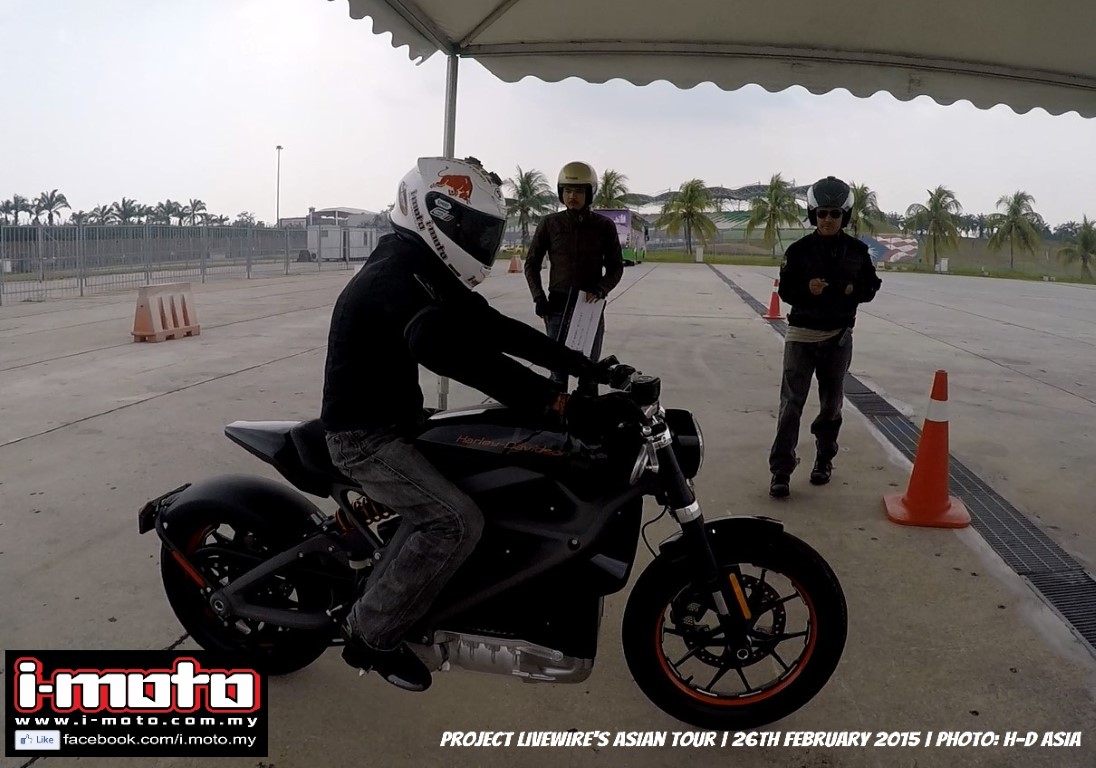
 That’s what we were going to find out during our scheduled ride for the Malaysian media. The media ride was part of the Project Livewire’s Asian Tour, and Malaysia was selected as one of the Asian stops. It was held at the Sepang International Circuit, and on the third day of the annual MotoGP Winter Test program. Initially, we had visions of “Are we going to ride the Livewire bike side-by-side with the MotoGP riders?”
Thank goodness that wasn’t the case as Harley Asia had only booked the circuit’s spare lot for the event, where the Livewire bikes were parked. There were eight units brought into Malaysia by Harley Asia, seven were used for the demonstration ride and one was utilised as an exhibition unit at the Paddock Club of the circuit where the Asian and Malaysian media had gathered for technical briefing and presentation of the motorcycle.
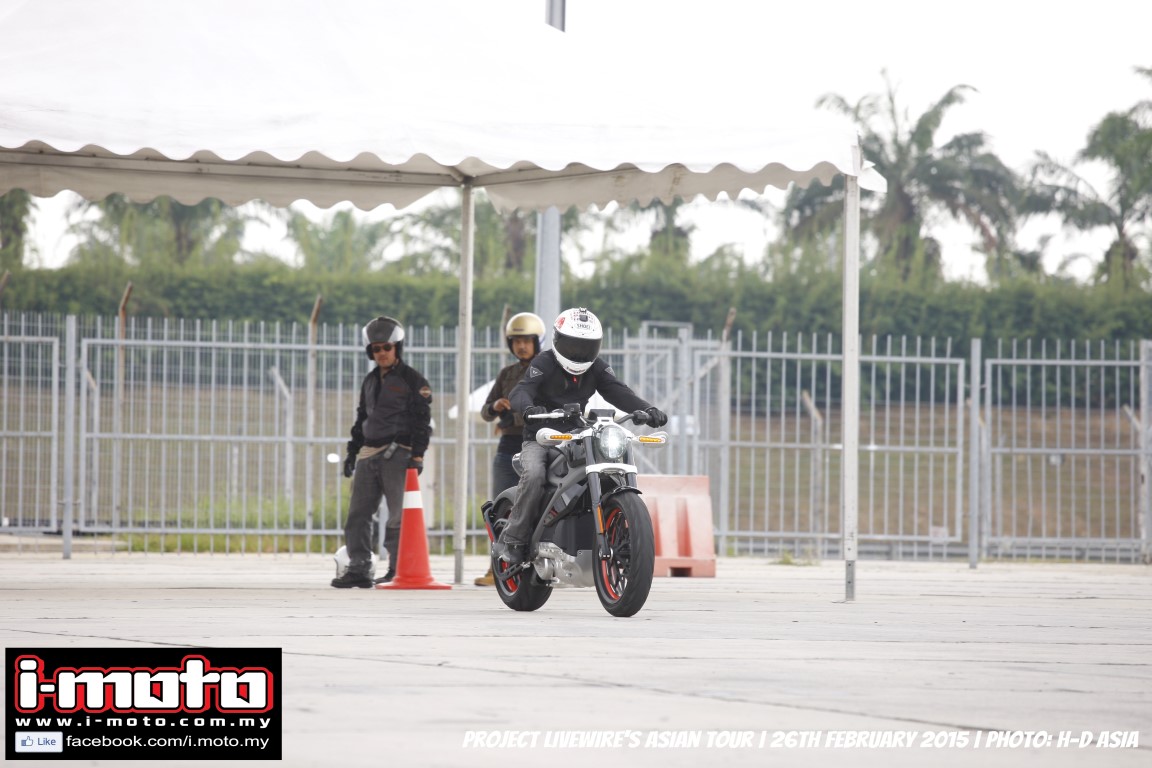
Following a technical brief Harley Davidson Asia, we took our turn at riding the Livewire bike for a lap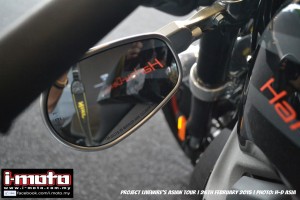 around the spare lot to get a fee
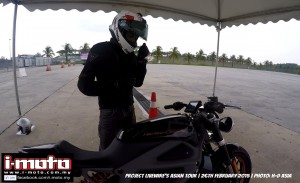 l of its powerband and maneuverability. It was cool to say the least, for being the dozen or so Malaysians to have the opportunity of riding the same motorcycle as used by the Black Widow and Captain America in the upcoming Avengers’ movie.
After our group had completed the compulsory one-lap trial, it was time for us to be escorted for a ride through the outer roads of Sepang Circuit, which are the service roads used for travel from the Welcome Centre to the main track as well as to the other side without entering the actual track.
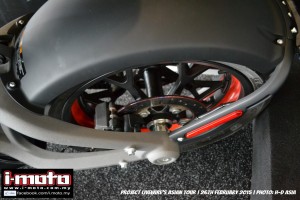
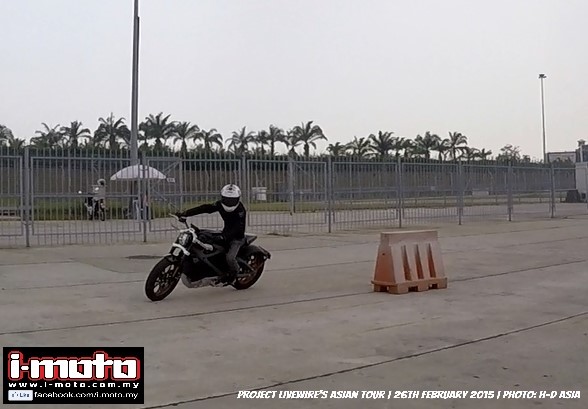
 While the Livewire has no gearbox, it is able to go up to 100km/h within a few seconds, just like any normal naked sports or a superbike. The bike comes with an informative LCD screen in the middle of the handlebars, which is touchscreen based, just like a smartphone or tablet PC. To start the Livewire, first we need to switch it on via a button, then we have to press the starter button just like any other superbike. The Livewire’s electric powered engine has a maximum power of 74 hp and 71Nm of torque, and almost a near-zero quietness when idle as opposed to a conventional bike.
 T
T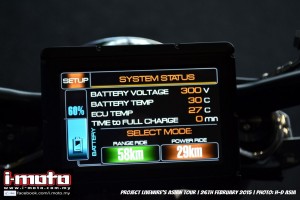 he LCD screen also switched on after this, and there’s a choice of two power modes; one of which was more torquey but we were advised to go for the Standard option for our ride.
It took us a while to get used to such a quiet atmosphere as there were times we were not even sure the bike’s engine was lying idle or totally switched off. It is a very unusual experience for a rider to not hear the typical roaring sound coming from any V-Twin H-D engine as the Livewire’s version is totally different. Once we opened the throttle, what greeted us was still a near-silent situation albeit with a slight jet-sounding pitch, which became something closer to a siren as we increased the Livewire bike’s speed.
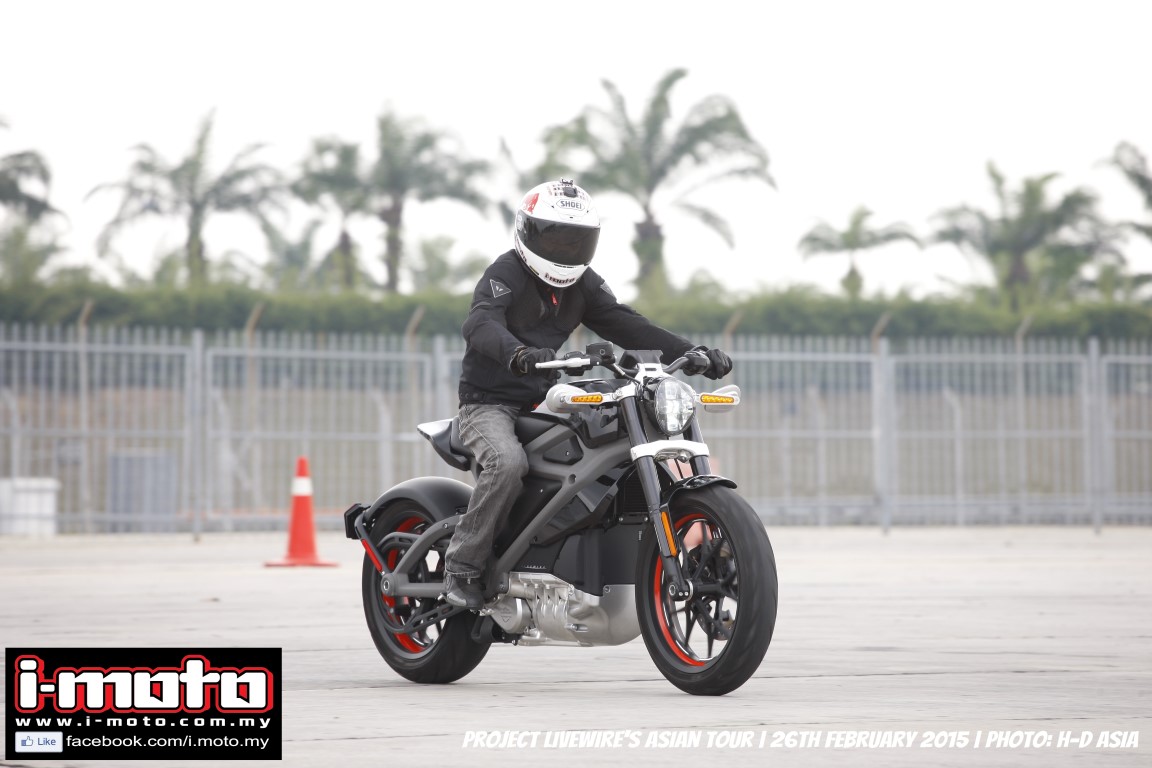
Looking at the Livewire in real life as opposed to seeing it in pictures on the Internet and foreign motorcycling magazines that have already rode it last year, was a sight to behold. Likewise, the Livewire bike has quite a compact body shape.
When the throttle is opened, the sounds a smooth electric bike can be heard. Livewire throttle response is linear and does not generate power only. Construction began moving with the delivery of regular and consistent power. At a glanced at the LCD panel, we had already reached a speed of 130 km/h and the bike is capable of r eaching a top speed of slightly above 155km/h!
When the throttle is released, Livewire provides engine braking power and at t he same time this function helps to slow down the speed of the motorcycle. We were told by closing the throttle for a few moments would also activate the charging of the bike’s lithium-ion battery. Handling performance is aided by a pair of inverted front Showa forks, a rear Showa absorber, brake systems and supported by Michelin tyres, with the size of 120/70-18 for the front and 180/55-17 at the rear. However, ABS support is not included for the Livewire prototype.
According to H-D, Livewire is able to move as far as 150 km with a full charge. Overall, Livewire is an awesome bike. Although it only exists in prototype form, Project Livewire is designed to gauge important feedback from the media and public from its global Tour where the input will be instrumental to H-D’s plans of improving the motorcycle for a possible commercial mass-production in the near future.
For now, Project Livewire remains a futuristic concept and not available for sale, until all improvements to its limitations can be achieved.